

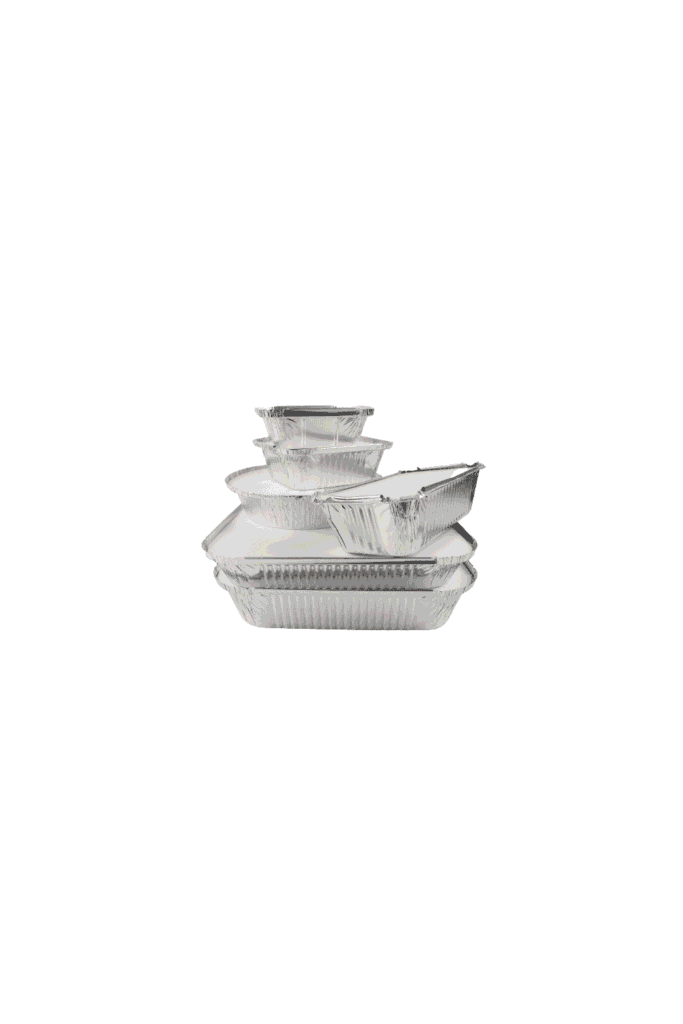
Foil containers are one of the most used items in any takeaway, restaurant or catering kitchen. They go straight from the oven to the customer, keep food hot, and stack neatly for delivery. The problem is the names: No.1, No.2, No.6A and No.9 don’t tell you much on their own. This guide explains what each size is, what it holds, and which one to use for which dish.
Foil Container Sizes at a Glance
Sizes vary slightly between manufacturers, so the figures below are approximate.
| Size | Shape | Approx. top size | Approx. capacity | Best for |
|---|---|---|---|---|
| No.1 | Small rectangular | about 125 to 130 × 95 to 100mm | about 250ml | Sides, sauces, dhal, single portions of rice |
| No.2 | Medium rectangular | about 150 × 120mm | about 450ml | A single curry, stew or pasta main |
| No.6A | Long rectangular | about 200 × 110mm | about 600 to 700ml | Rice, noodles, large mains, meal deals |
| No.9 | Square, 9 × 9in | about 230 × 230mm, 2in deep | Family size | Lasagne, traybakes, roasts, catering and sharing dishes |
Which Size Should I Use?
No.1: small portions and sides
The No.1 is the go-to size for sides. Takeaways use it for bhajis, sauces, dhal, chips and small portions of rice. It also works well for desserts and children’s meals.
No.2: the standard single main
The No.2 is the classic takeaway main container. A single curry, chilli, stew or pasta dish fits comfortably, with room for the lid to sit flat.
No.6A: rice, noodles and bigger portions
The No.6A is long and narrow, so it suits rice and noodles, and it fits well in delivery bags. Many takeaways use it for large portions or combined meal deals.
No.9: family meals and catering
The No.9 is a large 9 × 9 inch square tray. Caterers, bakers and home cooks use it for lasagne, cottage pie, roast potatoes, traybakes and party food. It is also handy for batch cooking and freezing.
Do Foil Containers Come With Lids?
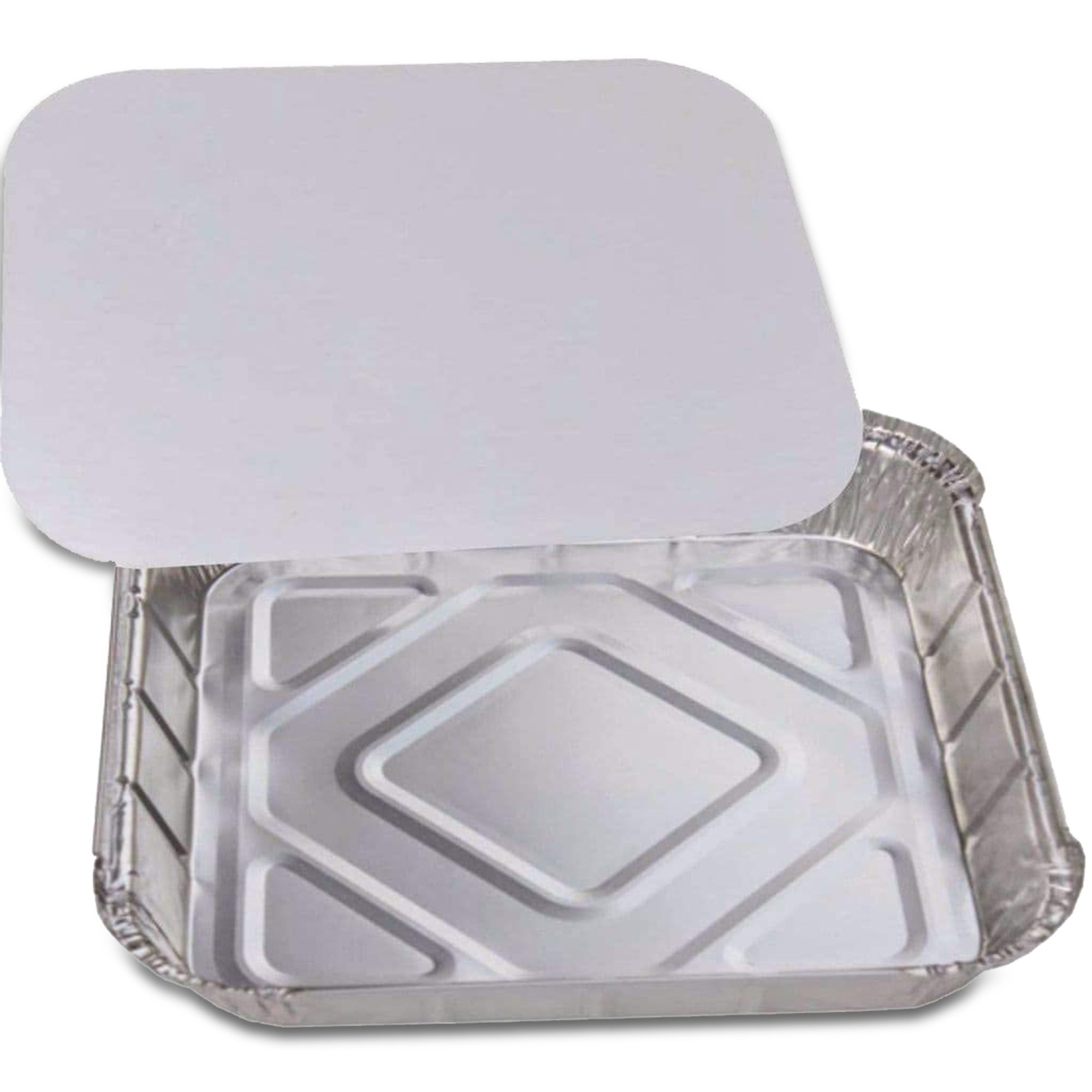
Lids are usually sold separately, so you can order exactly what you need. Board lids (foil-backed card) sit on the rim and are folded down to seal. You can write on them with a pen, which makes labelling orders or frozen meals easy. Always match the lid to the container size: a No.2 lid will only fit a No.2 container.
Can Foil Containers Go in the Oven, Freezer or Microwave?
- Oven: yes. Aluminium foil containers are made for hot food and can go in a conventional oven. Board lids should be removed before oven use.
- Freezer: yes. They are ideal for batch cooking and freezing meals, and the lid keeps food covered.
- Microwave: check your microwave’s instructions first. Many microwaves are not suitable for metal containers, so it is safer to move the food to a microwave-safe dish.
Why Businesses Choose Foil
- Keeps food hot during delivery
- Strong and leak-resistant for curries and sauces
- Stacks neatly with lids on
- Aluminium is widely recyclable once clean
- Low cost per container when bought by the carton
Buying Foil Containers in Bulk
Most takeaways and caterers buy foil containers by the full carton, which brings the cost per container right down. At Sabco Packaging you can order No.1, No.2, No.6A and No.9 foil containers and matching lids in full cartons, and mix sizes in one order. Quantity discounts are applied in your basket, and UK delivery is free on orders over £75 ex VAT.
Looking for more takeaway packaging? Browse our food packaging range, including sauce pots, microwave containers and paper bags.
Frequently Asked Questions
What size is a No.2 foil container?
A No.2 is a medium rectangular container of about 150 × 120mm, holding about 450ml. It is the standard size for a single takeaway main.
What is the difference between No.6 and No.6A?
Both are long rectangular containers of a similar size. The No.6A is the most common in UK takeaways. Check the lid is the matching size before ordering.
How many portions does a No.9 foil tray hold?
A 9 × 9 inch tray usually serves around 4 people, depending on the dish, which makes it popular for family meals and catering.
Are foil containers recyclable?
Yes, aluminium is widely recyclable. Containers should be emptied and rinsed first. Check with your local council for what they collect.